Rubicon Organics: A Premium Cannabis Brand Waiting on Its Second Greenhouse
Rubicon Organics (TSXV: ROMJ) posted a record $18.5M quarter, yet the whole company trades for about half a year's sales. Here's what the bet on its new Cascadia greenhouse means for investors.
TSXV: ROMJ | Price: $0.44 | Market Cap: $32.7M | Shares Outstanding: 74.2M
Not financial advice. Always do your own research.
Updated October 19, 2026 to reflect Rubicon's $3.0 million private placement and Pacifica capacity expansion.
Rubicon Organics just posted its best quarter ever, with $18.5 million in net revenue for Q2 2026. Yet the whole company trades for about $33 million on the TSX Venture, roughly half a year's sales. That gap says the market has doubts. Whether those doubts are fair comes down to one greenhouse in Hope, BC.
What Rubicon Does
Rubicon grows premium cannabis in greenhouses in British Columbia. Its brands include 1964 Supply Co. (craft-style flower and vapes), Simply Bare Organic, Homestead and Wildflower (CBD topicals). Most of its products end up on store shelves across Canada, and it has started small medical exports to the UK, Poland and Australia.
How It Makes Money
Rubicon sells flower, pre-rolls, vapes and topicals to provincial wholesalers, who supply the stores. Excise tax takes a big bite: about 22 cents of every sales dollar in 2025 went straight to the government. That is one reason Rubicon focuses on premium products, where higher prices make the tax hurt less.
The growth has been steady. Net revenue went from $22.6 million in 2021 to $59.5 million in 2025, and it rose another 17% in the first half of 2026.
The Competitive Advantage
Rubicon's edge is its brands, especially 1964, which the company says has been one of Canada's top premium flower brands for several years. Premium cannabis has held its price far better than cheap flower, which has been hammered by oversupply.
Still, it's a thin moat. Cannabis shoppers switch brands easily, and competitors launch new strains every month. Rubicon has to keep earning its spot on the shelf.
The Numbers
Rubicon has been Adjusted EBITDA positive every year since 2022: $1.9 million in 2022, $4.4 million in 2023, $4.0 million in 2024 and $5.0 million in 2025. In 2025 it also posted its first-ever full-year net profit, a modest $1.1 million.
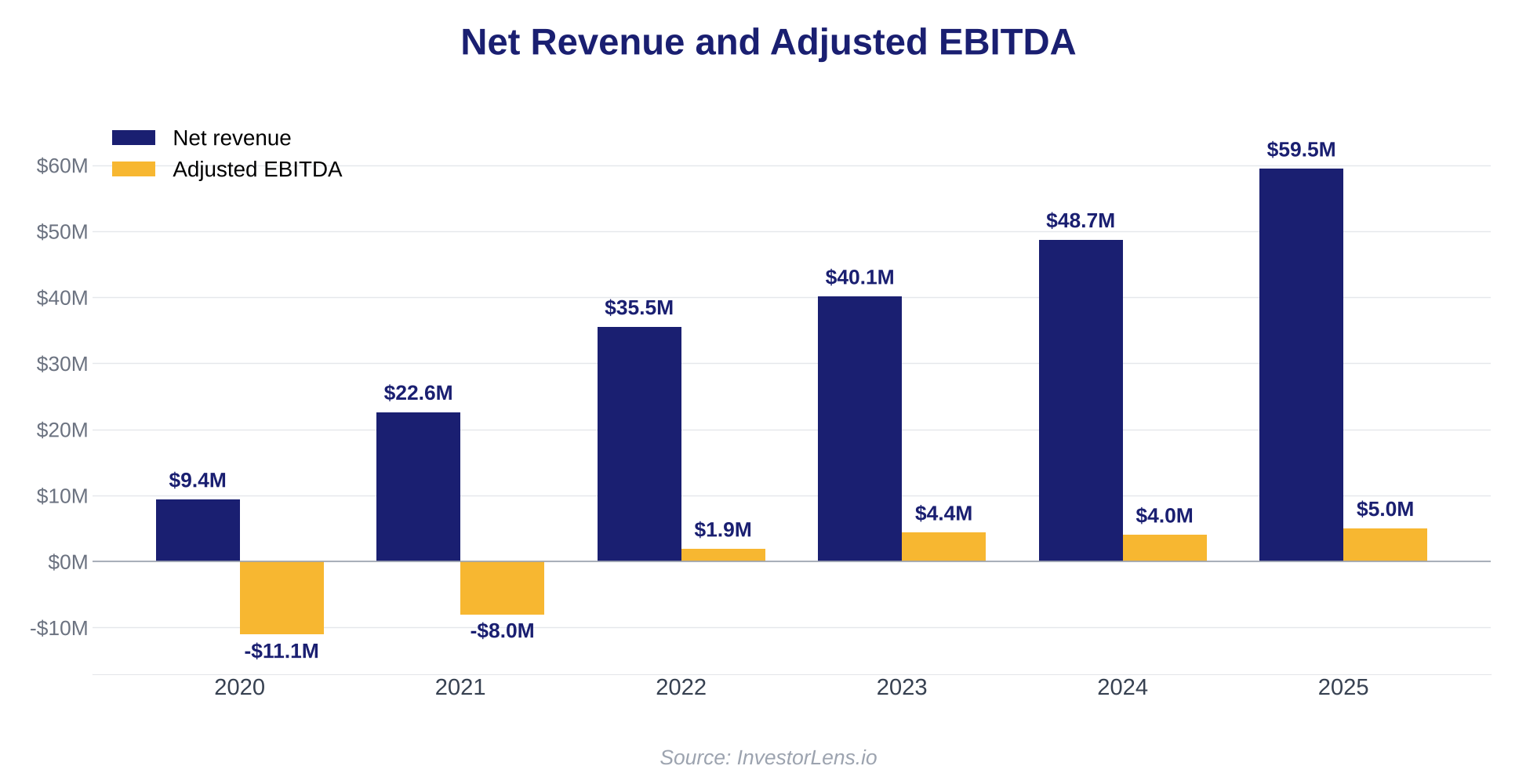
2026 has been harder so far. First-half Adjusted EBITDA fell to $0.5 million from $2.1 million a year earlier, and gross margin before fair-value adjustments slid from about 33% to about 25%. The cause is the new greenhouse: its costs arrived before its sales did.
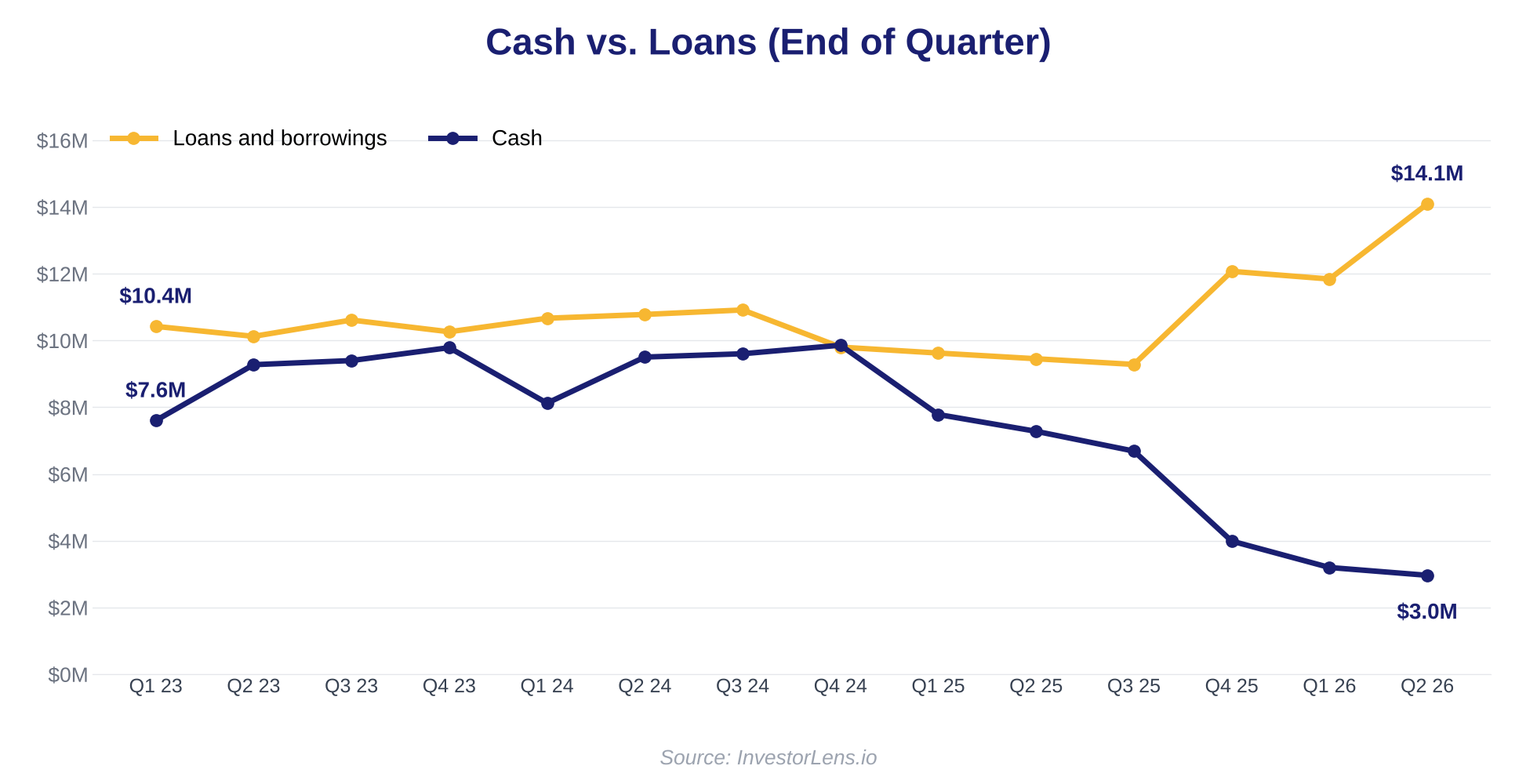
The balance sheet is the weak spot. At June 30, 2026, Rubicon had $3.0 million in cash against $14.1 million in loans, and operating cash flow over the last four quarters was negative.
The Big Bet: Cascadia
In June 2025 Rubicon bought a greenhouse in Hope, BC (now called Cascadia) for $4.5 million. It adds about 4,500 kg of yearly capacity to the 11,000 kg it already had. The site got its licence in October 2025, but it only contributed about $450,000 of sales in Q2 2026 because yields are still below target.
Management expects Cascadia to show up in results from Q3 2026, and has talked about gross margins in the mid-40s in 2027.
On October 19, 2026, Rubicon added a second lever. It raised $3.0 million from Siwash Rock Investments, the investment company of entrepreneur Ted Reid, at $0.45 a share with no fees paid. Most of the money will upgrade the lighting at its Delta greenhouse (now called Pacifica), lifting that site from 11,000 kg to 15,500 kg a year. With Cascadia, total capacity would reach 20,000 kg by June 2027, about a year earlier than management's previous estimate. Growing more in buildings it already owns should lower the cost of each gram, which supports the margin story. The usual caveat applies: Rubicon's timelines have tended to slip.
Key Risks
Cash and dilution — Rubicon had $3.0 million in cash at June 30. The October raise adds $3.0 million, but most of it is earmarked for the lighting project rather than day-to-day needs, so the cushion is still thin. Together with the $4.5 million raised in 2025, the share count is up about 31% since the start of 2025.
Cascadia execution — if yields stay low, the margin story slips into 2027 or later.
Pricing — competition in Canadian cannabis isn't going away.
Valuation Context
At about $0.44 a share and 74.2 million shares, Rubicon trades at around 0.5x trailing sales. Including debt, that's roughly 12x trailing Adjusted EBITDA, a figure weighed down by Cascadia's start-up costs. If the second half of 2026 plays out as planned, that multiple compresses quickly. If it doesn't, the balance sheet becomes the story.
Verdict
Rubicon Organics is worth a closer look for patient investors comfortable with small-cap risk. It has real brands, a long record of revenue growth and a clear catalyst. The key thing to watch is Q3 2026 results in November: is Cascadia producing meaningful sales, is Adjusted EBITDA back to positive, and has cash stopped falling? After that, the Pacifica lighting upgrade and its June 2027 target become the next test.
Want the full picture on Rubicon Organics? (ROMJ.V)
Valuation, financial analysis, red flags and a full research report, all on one page.
View ROMJ.V Analysis →